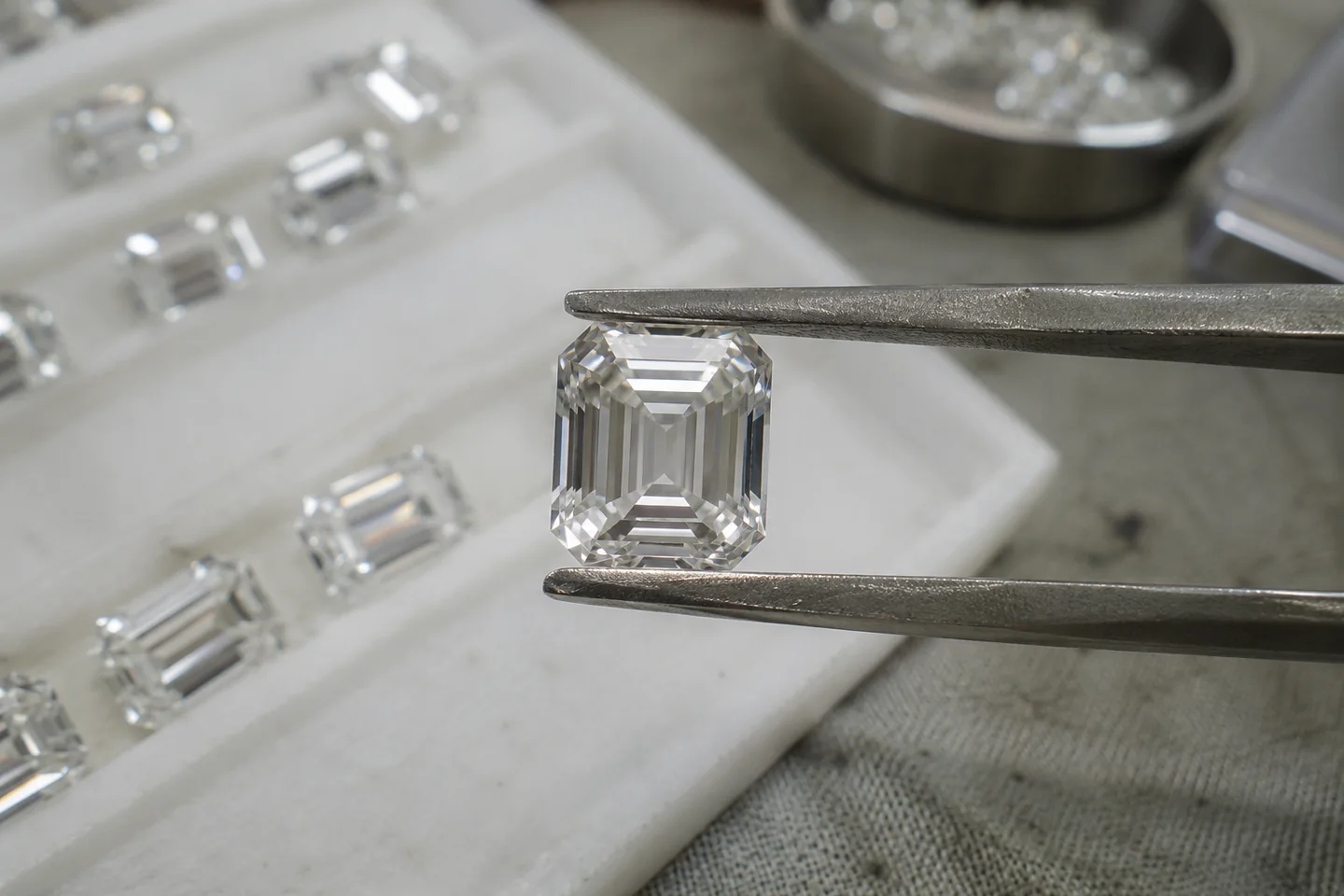
For B2B buyers sourcing diamond loose diamonds at scale, OpalCraft supplies loose CVD and HPHT lab-grown diamonds for OEM jewellery manufacturing with a minimum order quantity of 50 stones per size and colour band, dimensional tolerances of plus or minus 0.02 millimetres on calibrated sizes, girdle and table tolerances controlled to plus or minus 1.5 percent, lot inspection to AQL 2.5, and shipment under EXW, FOB and DDP terms. Production covers round brilliant and fancy shapes in white and fancy colour ranges, with each parcel sorted, measured and documented before dispatch. Pricing is tailored upon direct factory inquiry, based on size mix, cut specification, certification requirement and delivery destination.
OEM Specification for CVD and HPHT Production
CVD and HPHT are two distinct growth methods that produce diamonds with the same chemical composition and crystal structure, and the correct choice depends on size, colour target and downstream setting application. CVD material is commonly specified for larger white stones and precise fancy cuts, while HPHT material is widely used for melee, calibrated rounds and selected colour ranges. OpalCraft segregates growth method at parcel level, so buyers never receive mixed-method lots unless that mix is confirmed in writing before production. Each order specification sheet records growth method, shape, size range, colour, clarity, cut grade, fluorescence target and polishing finish, forming the reference document for inspection.
Parameter Specification
Growth method CVD, HPHT, segregated by lot
Shapes Round brilliant, oval, pear, emerald, princess, cushion, marquise, heart
Size range Melee to large calibrated singles, sorted by sieve and millimetre
Colour D to J white range, fancy colours on confirmed specification
Clarity IF to SI range, graded per parcel specification
Cut tolerance Diameter plus or minus 0.02 mm, table plus or minus 1.5 percent
MOQ 50 stones per size and colour band
QC standard AQL 2.5 sampling inspection
Trade terms EXW, FOB, DDP
Buyers should define whether stones are intended for pave, halo, solitaire or tennis jewellery production, because setting method affects girdle thickness, point protection and pairing requirements. Matched pairs and layout sets are assembled against the same tolerance file used for single stones, with side-by-side colour comparison under controlled lighting. Stones that fall outside the agreed diameter or depth range are removed during sorting rather than averaged into the parcel, which protects setting efficiency and reduces bench rework for manufacturers working to fixed metal mount dimensions.
Cut, Colour, Clarity and Size Tolerances
Calibrated diamond loose diamonds require tighter control than mixed parcels because a small deviation in diameter can affect seat cutting, prong alignment and finished surface evenness. OpalCraft measures diameter, total depth, table size, crown height and girdle thickness as a connected set, not as isolated values. For round brilliant stones, symmetry and polish are graded alongside proportions, and hearts and arrows patterning is supplied only when it is specified and verified for that lot. Fancy shapes require additional checks for length to width ratio, bow tie effect, corner integrity and outline consistency across the set, especially for emerald, pear and marquise cuts destined for matched earrings or side stone layouts.
Colour and clarity grading follows the agreed parcel band, with stones positioned at the boundary reviewed individually before inclusion. Buyers are advised to specify whether near colourless material is acceptable for yellow gold settings or whether a stricter white band is required for platinum and white gold production. That single decision influences sorting yield, lead planning and inspection criteria, and it should be fixed in the purchase specification rather than adjusted after polishing is complete.
Buyer Inspection Guide and AQL 2.5 Quality Control
Incoming inspection should begin with document reconciliation: compare parcel count, total carat weight, size distribution and growth method against the specification sheet and packing list. Buyers can then sample to AQL 2.5, checking a representative selection from each size band rather than drawing only from the top layer of the parcel. Recommended checks include loupe inspection for inclusions and surface features, millimetre measurement of diameter and depth, colour comparison against master stones, and verification of polish and symmetry under consistent lighting. Any discrepancy should be recorded by size band and stone count, with photographs where possible, so the factory can isolate whether the issue is sorting, measurement or transit related.
Private Label Packaging, Documentation and Trade Terms
OEM buyers can specify individual stone papers, sealed parcel papers, barcode labelled lots or retail ready private label packaging, with growth method, size, colour and clarity printed per lot. Certification is arranged only for stones and formats confirmed in the order, and uncertified melee is documented by parcel rather than by individual report. Explore Loose CVD & HPHT Lab-Grown Diamonds Custom Cut for custom layouts and calibrated sets. Shipments are prepared under EXW, FOB or DDP terms according to destination and buyer preference, with final counts verified before sealing. For an exact quotation, send your size chart, shape mix and target bands directly to the factory, as pricing is tailored upon direct factory inquiry.
Loose CVD & HPHT Lab-Grown Diamonds Custom Cut
Private-Label Loose CVD & HPHT Lab-Grown Diamonds OEM Production for DTC & Retail Brands